DIN 51605 · Pure Plant Oil · CI Engine Compatible

PD100™ — technical properties and engine compatibility.

Technical data for evaluating PD100™ as a fuel for compression ignition engines — DIN 51605 compliance, viscosity characteristics, and the engineering countermeasures available to fleet operators.

DIN 51605 Specification Viscosity Management Request Data Sheet

Pure plant oil — not biodiesel. The distinction matters.

PD100™ is a pure plant oil (PPO) produced from the seed pods of Pongamia pinnata. The oil is mechanically extracted, filtered, and acid-degummed to fuel specification. It is not transesterified.

Biodiesel (FAME) requires reacting vegetable oil with methanol under heat and catalyst. PD100™ bypasses this entirely, resulting in lower production costs and no fossil carbon in the processing chain.

Simple. Mechanical. Proven for centuries.

Producing PD100™ requires no chemical solvents and no transesterification reactor. The core process is a direct mechanical cold-press, followed by acid degumming to reach DIN 51605 fuel specification.

  • Seed cleaning & dehulling
  • Mechanical expeller pressing
  • Settling & filtration
  • Acid degumming + neutralisation (closed-loop fertigation)
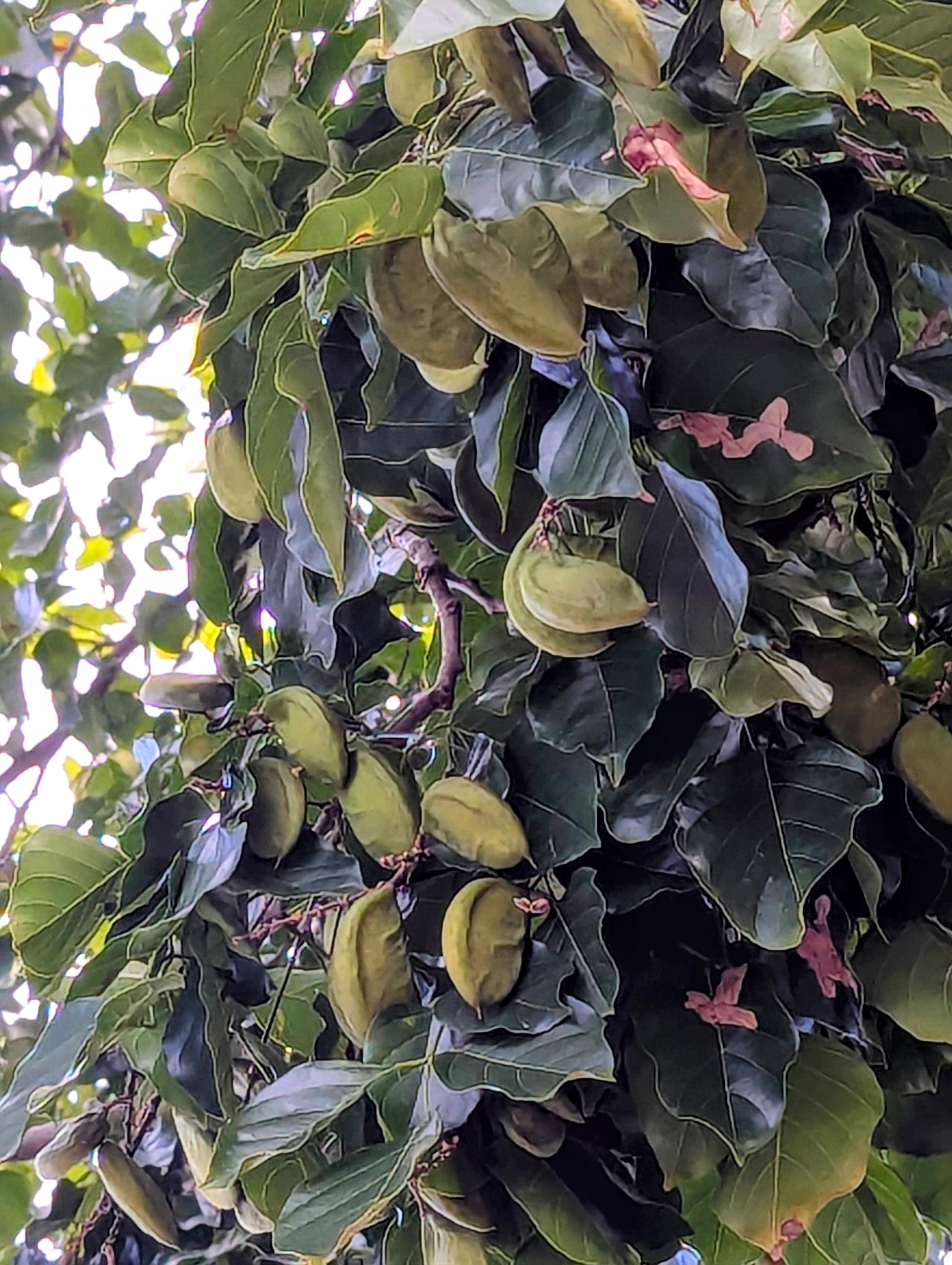
PD100™ — mechanically pressed Pongamia pure plant oil, ready for use as diesel substitute
PD100™ — mechanically pressed Pongamia pure plant oil, processed to DIN 51605 fuel-grade specification.

PD100™ properties against DIN 51605 — the PPO fuel standard.

DIN 51605 is the German Institute for Standardisation's specification for pure plant oil fuels used in compression ignition engines. It is the benchmark standard applied globally to PPO fuels.

← Scroll to see full table
Property Unit DIN 51605 Limit PD100™ (Pongamia PPO)
Density at 15°Ckg/m³900–930920–940
Flash point°Cmin. 101>150°C
Kinematic viscosity at 40°Cmm²/smax. 36.030–36
Calorific value (LHV)kJ/kgmin. 36,000~37,000
Sulphur contentmg/kgmax. 10<5
Phosphorus contentmg/kgmax. 12<3
Particulate contentmg/kgmax. 24<24
Acid numbermg KOH/gmax. 2.0<2.0
Iodine valueg I₂/100gmax. 12580–90
Oxidation stabilityh at 110°Cmin. 68–12

Understanding and managing viscosity — the key engineering challenge.

Kinematic viscosity of ~30–36 cSt at 40°C is the central technical challenge. Mineral diesel operates at 2–4 cSt. The established countermeasures are well-understood and within the scope of routine fleet engineering.

🔥

Fuel Pre-Heating

Raising PD100™ to 70–80°C reduces viscosity to ~8–12 cSt — approaching diesel levels. A fuel line heat exchanger fitted to the cooling or return circuit is the standard implementation. Commercial kits available for most haul truck platforms.

⚙️

Engine Selection

Indirect injection (IDI) and pre-chamber engines are inherently more tolerant of higher-viscosity fuels and can operate on neat PD100™ without pre-heating. CRDI engines require the pre-heat system.

⏱️

Injection Timing Optimisation

Advancing injection timing compensates for the slightly longer ignition delay of PD100™ versus mineral diesel. This is a software or mechanical adjustment depending on the engine management system.

Viscosity vs. Temperature — Pongamia PPO

At 20°C: ~60–80 cSt  |  At 40°C: ~30–36 cSt  |  At 70°C: ~10–14 cSt  |  At 80°C: ~8–12 cSt
Pre-heating to 70–80°C brings viscosity within an operable range for CRDI injection systems.

CRDI vs IDI — what each engine type requires.

← Scroll to see full table
Engine Type Pre-Heating Required Modifications Notes
Common-Rail Direct Injection (CRDI) Yes — 70–80°C Fuel line heat exchanger, detergent/decoking additive package Most modern haul trucks. Well-documented retrofit kits available.
Indirect Injection (IDI) / Pre-Chamber Advisable Fuel line heate exchanger for neat PD100™ Older engine designs. Can run PD100™ with minor modification, for colder climates.
Mechanical injection (older) Recommended Injector nozzle inspection; timing check Generally tolerant; minor timing adjustment may improve performance.

Vegetable oil in diesel engines — what television got right.

Long before PD100™, television programmes independently demonstrated that unmodified compression ignition engines can run on straight vegetable oil. Rudolf Diesel himself designed the original diesel engine to run on peanut oil in 1900.

A note on context: Both programmes used conventional cooking oil — unfiltered, unrefined, and with no quality control whatsoever. PD100™ is an entirely different product. Pongamia oil is ultra-filtered, degummed, and processed to meet DIN 51605 fuel-grade specifications — far cleaner than any cooking oil.
📺

MythBusters — Discovery Channel

Can a diesel engine run on straight cooking oil? Adam Hyneman and the MythBusters team fill a Mercedes diesel with used fryer oil — straight from a deep fryer, completely unprocessed. The engine runs. Power output reaches approximately 90% of the diesel baseline.

Watch on YouTube →
🚗

Top Gear — BBC

Vegetable oil for your Volvo diesel — cheap as chips. The Top Gear team run a Volvo diesel on standard supermarket cooking oil — no processing, no filtration. The Volvo runs normally. The episode notes that Rudolf Diesel designed his original engine specifically to run on vegetable oil.

Watch on YouTube →

Dangerous goods classification and storage.

🔶

Class C1 Combustible Liquid

Flash point >150°C. Lower hazard classification than mineral diesel (Class C2, flash point ~55–65°C). Simpler storage and handling requirements. Less volatile, safer to store at ambient temperatures.

🏗️

Storage Stability

Oxidation stability ~8–12 hours at 110°C per DIN testing protocol. Standard bulk storage infrastructure used for diesel is compatible. Antioxidant additive packages can extend storage life where required.

📦

Supply Chain Traceability

Every batch supplied with fuel quality certificate, feedstock origin documentation, and GO Scheme traceability records for NGER reporting. Chain-of-custody documentation maintained from plantation to delivery.

Ready to evaluate PD100™ for your fleet?

Request the full technical data sheet or discuss a fleet assessment. All enquiries treated in confidence.