Scope 1 Abatement · Safeguard Mechanism · CI Engine Fleets
The regulatory context, fuel economics, trial process, and carbon accounting relevant to mining operators evaluating PD100™ as a Safeguard Mechanism compliance option.
Safeguard Mechanism — 2026 Context
Proof of Concept — Queensland
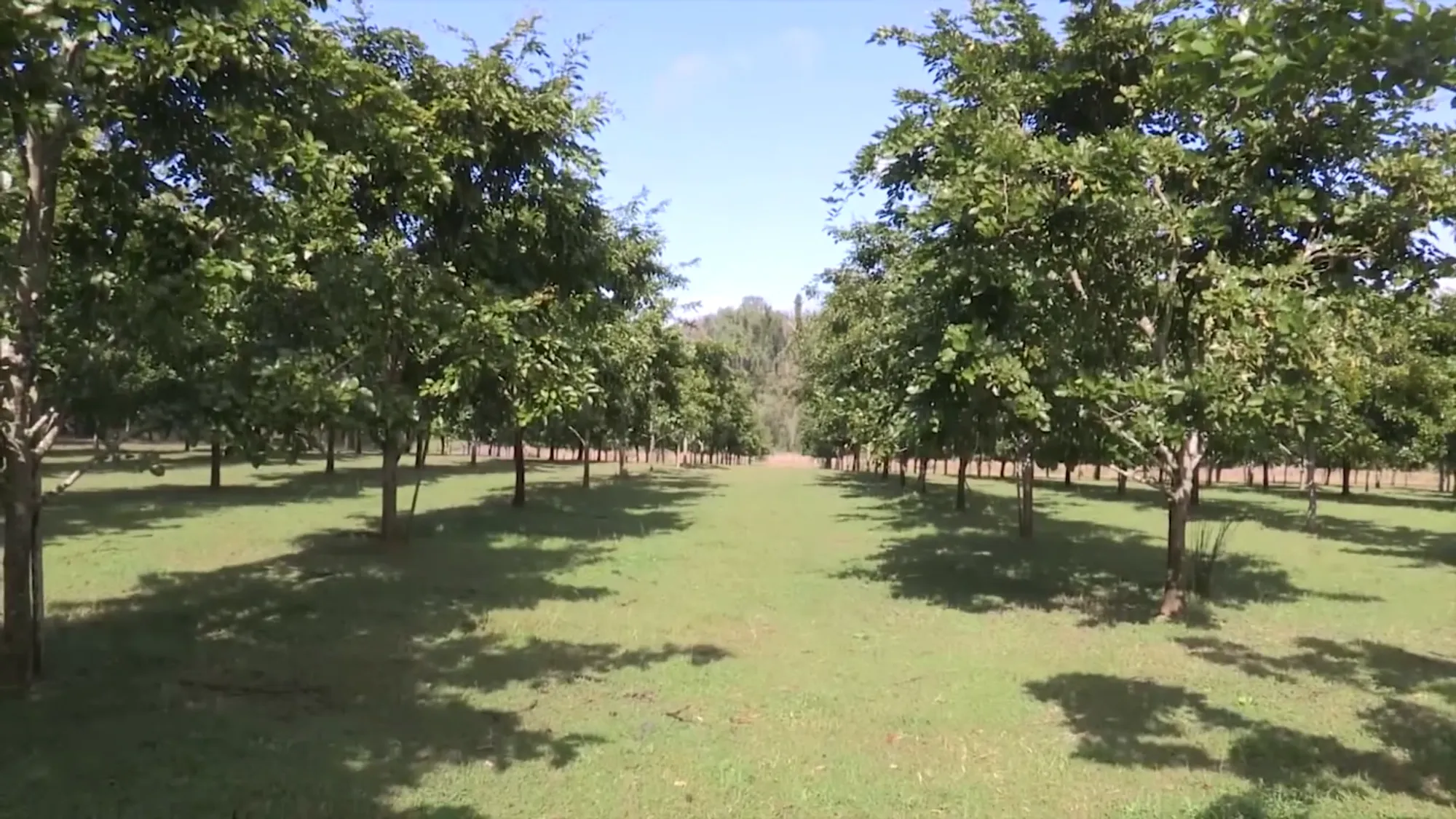
These photographs show 10-year-old Pongamia trees growing on non-irrigated Queensland coal mine waste stockpiles — actively producing seed pods and fixing soil nitrogen. No supplementary water. No fertiliser.

The Fuel Alternatives Landscape
Prototype demonstrations underway but commercial availability at 300+ tonne payload class remains years away. Charging infrastructure at large open-cut sites is a significant capital requirement. Also requires significant Solar Farm and Battery grid scale investement.
Available: Medium TermRequires on-site production or supply chain infrastructure not present at remote Australian mine sites. Performance at large payload class unproven at scale.
Available: Long TermGenuine molecular drop-in — no engine modification. However, current market pricing is approximately $0.50/L above mineral diesel, predominantly imported and subject to feedstock sustainability scrutiny.
~$0.50/L Premium Over DieselLimited domestic production availability. Typically priced above mineral diesel when available. OEM warranty capped at B20 in most standard systems.
Limited Availability · Higher CostRequires viscosity management (pre-heating for common rail engines) but is not a molecular drop-in. Target commercial price comparable to mineral diesel — not a ~$0.50/L premium. Entirely domestic supply chain with a carbon credit co-benefit.
Domestic · Net Zero · ~Diesel PriceThe Compliance Context
Facilities covered by the Safeguard Mechanism must hold net greenhouse gas emissions at or below a facility baseline declining at 4.9% per year. For large open-cut mining operations, diesel combustion in haul fleets is typically the single largest source of Scope 1 emissions.
A fleet of 40 large haul trucks operating 24/7 can consume 50–80 million litres of diesel annually. At 2.65 kg CO₂/L, that represents 130,000–210,000 tonnes of direct Scope 1 emissions from fuel alone. Operations that exceed their baseline must surrender ACCUs or Safeguard Mechanism Credits to cover the shortfall — at market prices around $35/tonne.
Trial & Commercial Programme
A structured four-step programme designed to minimise operational disruption and generate independent performance data at each stage before scaling.
Technical assessment of engine types, injection systems, and fuel handling infrastructure to define the modification pathway.
Site-specific model using your actual fuel consumption data, Safeguard baseline, and current ACCU pricing.
3–6 month structured trial with independent monitoring and post-trial report for scale-up decision.
Supply agreement scaled to volume requirements, aligned to plantation development milestones and budget cycle.
The Dual-Credit Structure
No other fuel pathway currently available in Australia combines direct Scope 1 reduction with sequestration ACCU generation from the same asset.
Substituting PD100™ for mineral diesel removes fossil CO₂ from your NGER Scope 1 fossil total. Biogenic CO₂ reported separately — does not contribute to your Safeguard baseline. Every litre of PD100™ burned displaces approximately 2.65 kg of fossil Scope 1 CO₂.
The Pongamia plantation supplying PD100™ simultaneously draws atmospheric CO₂ into biomass and generates ACCU sequestration credits. These can be surrendered against Safeguard obligations, sold on the secondary market, or retained for voluntary net zero positions.
Both the fuel abatement and the sequestration credits come from the same GBA supply relationship — simplifying procurement, compliance documentation, and NGER reporting.
Common Questions
Bring your annual fuel consumption data and current Safeguard baseline. We'll provide a site-specific carbon and cost model — no obligation.
Australian mining companies can achieve net-zero fuel consumption by transitioning from imported fossil diesel to PD100™, a 100% pure plant oil fuel. Because it is grown domestically from Pongamia trees and processed without fossil inputs, it provides a verified carbon-neutral alternative for heavy machinery and remote operations.
Yes, PD100™ is designed to be compatible with standard diesel engines used in heavy mining equipment. It aligns with the DIN 51605 fuel quality standard, allowing operators to decarbonize their existing fleet immediately without the massive capital expenditure required for new electric or hydrogen machinery.