National Security · Supply Chain Risk · Sovereign Production

Australia's diesel supply is dangerously exposed.

Australia holds just 33 days of diesel. Approximately 50% of supply transits the Strait of Hormuz. The US–Iran conflict has made sovereign fuel production a national security imperative — not just an environmental one.

The PD100™ Solution Start a Conversation
33 days
Australia's diesel stockpile (IEA obligation: 90 days)
~50%
Of supply transits Strait of Hormuz
0
Domestic refineries capable of large-scale diesel production
$1.1bn
Govt. committed to Cleaner Fuels Program 2025
100%
PD100™ domestically grown and processed
Zero
Offshore supply chain exposure for PD100™

Australia's diesel dependency — the numbers that matter.

Australia is one of the most fuel-import-dependent developed nations in the world. The country has no meaningful strategic petroleum reserve, has closed all but one of its domestic refineries in the past decade, and relies on supply chains that transit some of the world's most geopolitically volatile chokepoints.

⚠️

33 Days of Diesel

Australia's strategic diesel stockholding sits at approximately 33 days — well below the IEA member obligation of 90 days. In any significant supply disruption, Australia's mining, freight, agriculture, and power generation sectors would face rationing within weeks.

🌊

The Strait of Hormuz Exposure

Approximately 50% of Australia's refined fuel imports transit the Strait of Hormuz — a 33km-wide chokepoint between Iran and Oman. Any closure or military interdiction of this strait, even temporarily, would immediately affect Australian fuel supply and pricing.

🏭

Domestic Refinery Closure

Australia closed its last major independent refineries between 2012 and 2021. The Ampol Lytton refinery in Queensland is the only significant remaining domestic refining capacity. Australia is now almost entirely dependent on imported refined product.

March 2026 context: The escalating US–Iran conflict has increased the probability of Strait of Hormuz disruption to levels not seen since the 1980s Tanker War. The Department of Defence has publicly identified fuel security as a first-order national security vulnerability. This is not a hypothetical risk — it is an active one.

Government has committed — domestic production is the mandate.

The Australian Government's $1.1 billion Cleaner Fuels Program (announced October 2025) is the largest domestic biofuel funding commitment in Australian history. It explicitly targets domestic production of low carbon liquid fuels as both an emissions reduction measure and a fuel security intervention.

Cleaner Fuels Program — what it means for PD100™

The program funds domestic production of low carbon liquid fuels (LCLFs) that can substitute for mineral diesel in hard-to-abate sectors. PD100™ — domestically grown, processed in Australia, and net zero lifecycle — is directly aligned with the program's eligibility criteria. GBA is actively engaging with the program's application process.

  • $1.1 billion allocated over program life
  • Domestic production explicitly required — imported HVO not eligible for full support
  • Hard-to-abate sectors (mining, freight) prioritised
  • Guarantee of Origin scheme traceability required — PD100™ compliant
  • Program opens largest biofuel funding window in Australian history
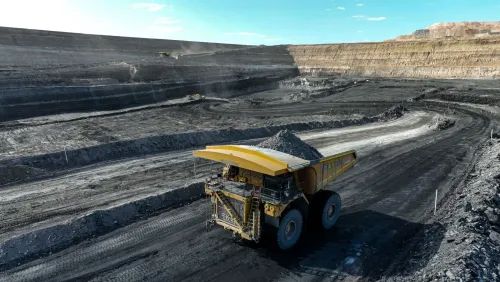
Australian mining haul fleet — diesel dependent and exposed to fuel security risk
Australian mining operations consume billions of litres of diesel annually — making them directly exposed to fuel supply disruption and the primary target for domestic biofuel substitution programmes.

A fuel that cannot be interdicted, sanctioned, or embargoed.

PD100™ is grown on Australian soil, processed in Australia, and delivered within Australia. There is no offshore component in the supply chain. No refinery exposure. No shipping lane risk. No geopolitical counterparty.

← Scroll to see full table
Supply Chain Factor Mineral Diesel Imported HVO PD100™ Pongamia
Production originMiddle East / offshoreNetherlands / SingaporeAustralia
Strait of Hormuz exposure~50% of supplyIndirect — feedstock routesNone
Domestic processingMinimal (Lytton only)None — fully imported100% domestic
Sovereign supply controlNoNoYes
Vulnerable to sanctionsYesPartiallyNo
Cleaner Fuels Program eligibleNoPartialYes — full eligibility

The time to act is before the disruption.

Pongamia plantation development takes 4–7 years. Operations and government agencies beginning supply chain discussions now are positioned to have domestic fuel available when geopolitical pressure peaks.